
At Wildies Casino, registration information should be clear before anyone starts an account application. Creating an online gambling account can involve providing personal details, confirming contact information and completing age and identity checks. The exact registration form and requirements depend on the service and the rules that apply to it. This page describes common steps and important precautions. It does not confirm that registration is currently available or that any person is eligible.
Gambling is restricted to adults aged 18 and over. In Great Britain, real-money gambling services must meet applicable legal and regulatory requirements. A UK-focused website address or wording does not, by itself, establish permission to provide gambling services in Great Britain. Check the legal status of a service before submitting personal information or depositing money.
What Information May Be Required?
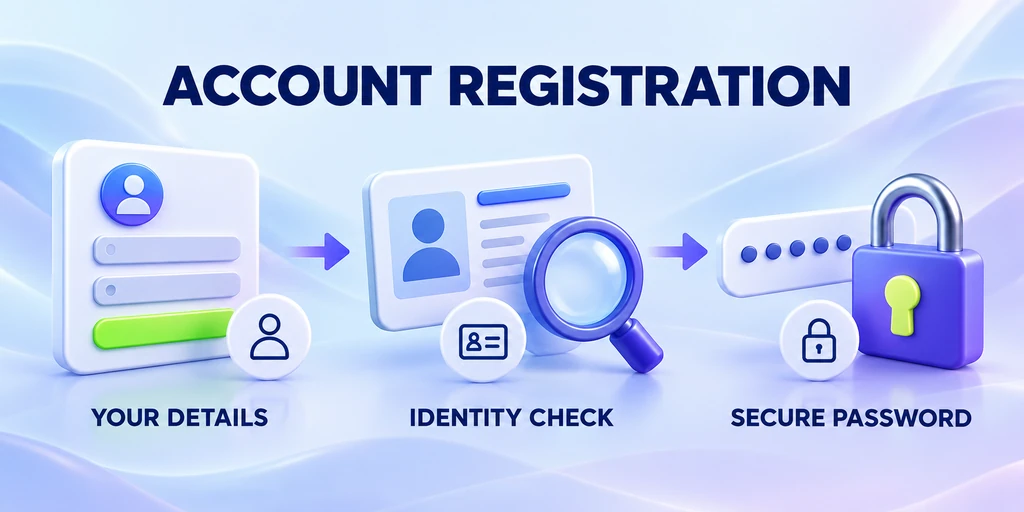
A registration form may request a full legal name, date of birth, residential address, email address and telephone number. Some services may also ask you to create a username and password or select account preferences. Provide accurate information that matches your identity documents. Incorrect details can cause problems with verification, account access and payment requests.
Accurate information should be distinguished from unnecessary information. Read why a field is requested and which format is expected before completing it. Do not substitute another person's details or invent information to pass a form. If a requirement is unclear, establish the genuine service's explanation before proceeding, especially where identity documents, contact access or financial information are involved. Taking time to understand a field is preferable to creating an inaccurate permanent account record.
For example, a field requests information that the visitor does not understand. The useful next step is to read the field explanation and confirm its purpose through a verified route before submitting. Keep the field label, stated purpose and part of the process where it appears so that the sequence can be explained without relying on memory. This establishes what happened in that particular situation; it does not establish a need to invent an answer simply to move past an unclear field. A clear answer to the original question is more useful than taking another action simply to see whether the screen changes.
Why Are Age And Identity Checks Important?
Age checks help prevent underage gambling. Identity checks can confirm that the person opening an account is the person named in the registration details. Further checks may be required to meet legal obligations, protect accounts and confirm payment ownership. Follow secure instructions and do not send identity documents to an unverified contact.
Different checks can establish different things. Confirming access to an email address is not the same as confirming identity, and a completed form is not proof that every eligibility requirement has been satisfied. Read the status associated with the actual check. If further information is requested, identify the reason and genuine submission channel rather than responding automatically to any message that mentions verification.
A practical case is one where a contact confirmation succeeds while another account check remains pending. In that situation, identify which check completed and which question the remaining status concerns. The most helpful record would contain the confirmation type, current status and non-secret request wording Keep the observed facts separate from any explanation that has not yet been confirmed. In particular, do not assume complete identity or eligibility confirmation from a successful email confirmation alone. Once the distinction is clear, it becomes easier to ask a focused question and decide whether any further action is necessary.
How Do You Register?
Where account creation is lawfully available, the general process may involve opening the registration page, entering the requested personal information, creating secure credentials and confirming an email address or phone number. You may then be asked to complete verification before accessing particular services. Follow the instructions shown on the actual registration form because steps can vary.
Before submitting, check every field carefully. Make sure your name, date of birth and address are accurate. Read the relevant terms and privacy information so you understand how account information is handled. Do not continue if the legal status, ownership or terms of the service are unclear.
Follow the actual registration sequence rather than assuming that a general guide describes every current screen. Keep account creation separate from an optional promotion or later payment. If the process stops unexpectedly, note the stage reached before starting again. Repeating the entire journey can create overlapping records and make it harder to establish whether an earlier account attempt already exists.
Consider a situation in which a form closes after submission without a clear completion message. It helps to check for an existing confirmation or account record before beginning another registration. Retain the submission time, contact address used and any confirmation already received rather than trying to reconstruct every detail afterwards. The purpose of that record is to make the particular issue understandable, without turning an unanswered question into a confident conclusion. It would be a mistake to infer a completely unsuccessful attempt merely because the final screen did not appear. If the essential point remains unresolved, pause instead of adding another uncertain step to the same sequence.
How Can You Create A Secure Password?
Choose a password that is unique and not used for any other website. A long passphrase can be easier to remember and harder to guess than a short, predictable password. Avoid names, birthdays, common phrases and sequences such as 123456. Use a password manager if appropriate, protect access to it and never share your password or one-time verification codes.
Choose credentials for the account you actually control and keep them separate from public or easily guessed personal information. A password should not be reused simply because it is convenient to remember. Protect the associated email and understand available recovery options. A password manager can assist with unique credentials, but selecting the correct stored account remains your responsibility.
To put this into context, a visitor is tempted to reuse the password already used for their email. Before deciding what to do next, choose a separate unique credential and protect the account's genuine recovery route. A brief note covering the non-secret recovery options and account identifier can keep the relevant details together. That note should describe the issue rather than contain passwords, live codes or unnecessary personal documents. It should not be treated as evidence of adequate protection from using the same familiar password across unrelated services. The explanation should remain tied to the action and circumstances actually being discussed.
Can You Open More Than One Account?
Account rules may limit customers to one account. Creating multiple accounts to obtain additional promotions or avoid a restriction can breach the terms and may lead to account closure or loss of promotional benefits. Use your own details and contact support if you believe an account has been created in error.
What If Registration Does Not Work?
A form may fail because a required field is missing, the details do not match, the email address is already associated with an account or the service cannot verify eligibility. Check for typing errors and read any on-screen message. Do not repeatedly submit different personal details to get around a failed check. Contact support through a verified channel if you need help.
An unsuccessful registration screen does not explain its own cause unless the message actually states one. A formatting problem, duplicate-account notice and eligibility condition require different responses. Read the wording before changing information, and avoid creating multiple accounts to test different answers. Support can address a more useful question when the original action and message are described consistently.
One everyday example is that a form displays an error after several accurate details have been entered. A careful response would be to identify the exact field or stage mentioned rather than changing unrelated personal information. Useful evidence includes the error wording, attempt time and field labels concerned This approach separates an observation from a possible cause and avoids making the situation harder to explain through repeated attempts. There is no basis here for assuming a benefit from repeatedly altering accurate details until a form accepts them. Clarify the unresolved point first, and keep the decision about any later action separate from the task of understanding the existing record.
Which Details Should Match Across Your Account?
Accurate registration details make later account questions easier to resolve. Enter your own legal name, date of birth and current contact details as requested, and check them before submitting a form. A shortened name, an old address or a typing mistake may create a mismatch when the account is compared with documents. Do not use another person's details because they appear more convenient or because your own details are being checked.
Keep a clear distinction between a display name and the identity used for account checks. A nickname may be suitable in a field that explicitly asks for one, while a legal-name field serves a different purpose. If you discover a mistake after registration, use the documented correction route. Creating a second account can make the situation more complicated and may conflict with the account conditions.
- Check the spelling of names and the order of date fields.
- Use a contact address that you can access without another person's permission.
- Ask how to correct a mistake rather than opening a replacement account.
For gambling in Great Britain, age and identity must be established before gambling. Confirming an email address alone does not satisfy those checks. See the Gambling Commission guidance on age and identity checks.
Consistent details help avoid confusion between records, but consistency should not mean concealing a genuine change. A name, address or contact method may legitimately change over time. Use the service's current process to update accurate information rather than opening another account or editing separate records without understanding their relationship. Keep a note of what was changed and which confirmation was received.
For a concrete illustration, a person has moved and the account still displays their previous address. Start by taking time to locate the genuine update process and establish which records need accurate current information. Write down the changed field, update date and confirmation status using non-secret information wherever possible. The detail matters because similar-looking screens can describe different events or stages. This example does not confirm a need to create another account whenever a personal detail changes. Its purpose is to show how a specific question can be narrowed down, leaving less room for guesswork or an unnecessary repetition of the original action.
What Is Different About Contact Verification And Identity Checks?
Confirming an email address usually establishes that you can receive messages at that address. It does not necessarily establish your age, identity or eligibility to gamble. A text-message confirmation similarly demonstrates access to a phone number at that moment. Treat each step according to what it actually checks rather than assuming that one successful code completes every account requirement.
An identity check may use different details and may require further action through a secure account route. Read the request carefully and establish who is asking before sending documents. Avoid replying with identity records to an address taken from an unsolicited message. If instructions are unclear, ask what is required and which upload method should be used. Do not edit documents in a way intended to misrepresent your identity or circumstances.
- Distinguish email confirmation from age and identity verification requirements.
- Use only the confirmed document-submission route described for your account.
- Ask for clarification when a request does not explain what is missing.
How Can You Prepare Documents Without Oversharing?
Before uploading a document, read the request for the required type, date range and visible details. A blurred photograph, missing corner or unreadable name may prevent a useful check. At the same time, an entire collection of personal records is rarely a helpful response to one narrowly described request. Send only what the confirmed request calls for, using the stated secure channel.
Do not assume that every kind of redaction will be accepted. If a document contains unrelated sensitive details, ask which parts may be hidden and which must remain visible. Keep the original file in a location you control and avoid leaving copies on a shared computer. A document-upload problem should be solved through clear instructions, not by sending the same private file to several unconfirmed addresses.
- Check readability and required details before uploading a document image.
- Ask about acceptable redaction instead of guessing what can be hidden.
- Remove temporary copies from shared devices after completing the relevant task.
Document preparation should begin with the exact request and genuine submission channel. Do not send a large collection of unrelated documents merely because one check is incomplete. Read which information is necessary and how it should be supplied. Keep account secrets and unrelated personal details out of general messages, and do not assume that an unsolicited request is genuine because it uses familiar branding.
An example worth distinguishing is one in which a message requests several documents but does not explain the outstanding check. The appropriate check is to confirm the request through the genuine account route and identify the specific information needed. Preserve the request reference, purpose stated and authorised submission channel and identify which part is known and which part still needs an answer. Avoid extending the conclusion beyond that evidence: it does not demonstrate a need to disclose unrelated personal records to resolve a narrowly described check. Keeping the issue narrow makes any explanation easier to assess and prevents unrelated account, payment or personal decisions from becoming mixed into the same question.
Which Account Choices Should You Consider Before Depositing?
Registration and depositing are separate decisions. Opening an account does not create a need to transfer money, accept a promotion or begin gambling immediately. Take time to understand the account conditions, the current payment process and the available controls. If any of those points remain unclear, leaving the account unused while you ask questions is a reasonable choice.
Think about communication preferences separately from account access. Marketing messages, product updates and necessary account messages can serve different purposes. Read each available choice rather than selecting every option automatically. Where limits or reminders are available, consider them before any spending takes place. A boundary chosen in advance is easier to assess calmly than a decision made during a loss or under a promotion's deadline.
- Separate the decision to register from the decision to deposit funds.
- Read communication choices instead of accepting every optional setting automatically.
- Locate account limits and closure routes before deciding whether to gamble.
Account creation does not require an immediate decision to transfer money. Consider available boundaries, contact preferences and security settings separately from optional rewards. Read each choice without assuming that its default setting reflects your personal needs. Completing registration can simply be the end of an administrative task; it does not create an obligation to use every feature or proceed to gambling.
A reader might encounter a case where a newly created account presents a payment option before the visitor has considered their limits. In practical terms, separate the completed registration from the decision about any later spending. Make a simple record of the account status, settings available and personal boundary chosen independently and use that record to describe the uncertainty accurately. The intention is to understand the situation, not to justify additional spending or disclosure. Do not take it to mean an obligation to deposit because account creation has already been completed. When the necessary information is unavailable, acknowledging that gap is preferable to proceeding on the basis of an attractive assumption.
How Should You Handle A Duplicate-Account Warning?
A duplicate-account warning can arise from details already connected with an earlier account, including an email address you have not used recently. Stop before submitting more registrations. Consider whether you previously opened an account under an older address or whether a family member uses the same device. A shared device does not mean that another person's account belongs to you.
Contact the appropriate help channel with a concise description of the warning. Explain what you remember about an earlier account without sending a list of possible passwords. Do not alter your date of birth, name or address to avoid a match. If an earlier account was restricted, closed or excluded from gambling, registration should not be used as a way to defeat that decision or restart access elsewhere.
- Stop creating accounts when a duplicate-registration message appears.
- Explain any earlier account details you genuinely remember through a secure channel.
- Keep restrictions and self-exclusion decisions in place while seeking help.
A duplicate-account warning should lead to clarification of the existing record rather than another attempt with altered details. You may have an older account or an incomplete earlier registration that needs to be identified. Use the genuine recovery or support process and describe the warning accurately. Do not borrow another identity or change truthful information simply to obtain a different response.
As an illustration, a registration attempt reports that an account may already exist. A useful way forward is to check the genuine recovery route and ask how the existing record should be handled. Keep the warning wording, contact address used and earlier confirmation messages in a form that can be understood later without exposing account secrets. Then distinguish the practical question from any broader expectation about a service or outcome. Nothing in this example establishes permission to bypass an account condition by entering another person's details. This allows the eventual answer to be assessed against the original issue rather than against a changing set of assumptions.
What If You Change Your Name, Address Or Phone Number?
Changes in personal circumstances can affect account records and recovery routes. Keep contact details current through the account process where available, and check which changes require additional confirmation. An updated phone number is especially relevant if codes or account alerts are sent by text. An inaccessible number can make a later password reset more difficult.
Use your current, accurate details rather than leaving an old address solely because it matches an earlier document. If proof is required, follow the specific instructions for that change. Avoid putting private records into a general chat box unless it is explicitly the confirmed secure route. Make one clear request that identifies the detail needing correction, and keep a record of the response for your own account history.
- Update recovery details after changing a phone number or email address.
- Ask which evidence is required for the particular account change.
- Keep copies of relevant confirmations without storing passwords beside them.
How Can You Recognise A Registration Page That Needs Caution?
An unfamiliar registration page deserves checking before you enter personal details. Look at the full address, the purpose of the form and the destination after any redirect. A familiar logo does not establish a connection to a particular business. Requests for remote computer access, payment to unlock registration or passwords for other services are reasons to stop and investigate.
Check where the account conditions and privacy notice can be found. If the page changes destination during registration, establish which service will hold the account and which terms apply. Do not treat a headline offer as confirmation of account eligibility. You can choose not to continue when the business identity or the handling of personal details is unclear.
- Check the full destination before entering identity or contact details.
- Never provide the password for your email account in a registration form.
- Read the account conditions and privacy notice before choosing to submit.
How Can You Keep A Useful Registration Record?
A short registration record can help if you later need to resolve an account mismatch. Note the address you used, the date, the account email and any non-secret reference number supplied. Keep the version or date of important terms where it is clearly shown. You do not need to record the password in an ordinary document to create a useful history.
Separate genuine confirmations from advertising. An account-created message, an email-confirmation message and a promotional message may arrive close together but serve different purposes. Store only the material needed for your own records, and avoid keeping unnecessary identity-document copies in a general downloads folder. If registration remains incomplete, your notes should say what step is pending instead of assuming that every account check has finished.
- Record useful dates and non-secret account references in one place.
- Keep account confirmations separate from optional promotional messages.
- Do not store passwords or live verification links in ordinary notes.
Frequently Asked Questions About Wildies Casino Registration
1. Who Can Register?
Online gambling is restricted to adults aged 18 and over, and additional eligibility rules may apply.
2. What Details May Be Needed?
A form may request your name, date of birth, address and contact details.
3. Why Must My Details Be Accurate?
Incorrect details can cause verification, access and payment problems.
4. Do I Need To Verify My Identity?
Age and identity checks may be required before gambling services can be used.
5. Can I Create Multiple Accounts?
Account rules may restrict each person to one account. Check the terms and contact support if unsure.
Wildies Casino Register: Make A Considered Decision
At Wildies Casino, account creation should never be rushed. Confirm that the service is lawful for your location, understand its terms and provide accurate details only through a secure registration process. Do not open an account if you are under 18, self-excluded or unable to meet the applicable eligibility requirements.